Sunday, September 28, 2014

Differentiation to the Rescue!

Three recent tweets caused me to ponder in some new ways:

  1. "Heading into another week of learning and teaching w/ @mssackstein & @WHSRowe on my mind." #influence by Mark Kuniya @MKuniya
  2. "It would feel wrong if I didn't transfer along what I learned to our Students." by Mark Kuniya
  3. "When we stop learning, we become irrelevant to our students." by Jasper Fox @jsprfox 

Differentiation - I've had the good pleasure of having more than one Google Hangout (GHO) with Mark and Jasper at different times. Both consistently cause me to reflect on my practice as an educator and open my mind to new learning opportunities for me and our students. I'm learning that with differentiated planning, instruction, practice, feedback and assessment, we can better meet the needs of our students with varying degrees of understanding. Both men have impressed on me our need to daily differentiate since we are aiming to teach individuals, not classes. When I realized that we have twenty or so students engaged in the learning with different background knowledge, different needs, different interests and varying levels of proficiency, we cannot expect one lesson to accommodate all students. Mark and I recently discussed the word "checkpoint" as another way of assessing student proficiency without using the often dreaded words "quiz" or "test" that can carry a negative connotation. I've started using "checkpoints" or "proficiency tickets" to formally assess our students. Our frequent "checkpoints" or "proficiency tickets" enable me to quickly provide timely feedback to students and guide me in adapting the lesson for our next class. Students appear more confident in their ability to demonstrate proficiency with some of their fear, anxiety or pressure minimized. Our students also know that reassessments are part of our learning process in our Standards-Based environment. Our students now know what Extra Practice they need before or after an assessment to improve their skills and the application and they're requesting it without my need to offer it. 

#GoodCallsHome - Our recently started nationwide movement of calling parents to share the great learning that's happening in our classrooms is having a huge impact on parents, students and teachers alike! I'd like to thank our co-founder Scott Capro, @ScottCapro, who has been very supportive and encouraging as we've worked on this undertaking. To date, there have been nearly fifty educators across the nation that have committed to weekly calls to the parents of our students to build relationships, encourage the parents for all their child is doing and to reinforce the need for parental support in the learning process. We are honored that so many teachers continue to make weekly #GoodCallsHome and write a generic post on our Google community page about the reaction or the feedback. This has fueled many of us to attain greater depths of learning in our students and in ourselves! 

Thursday, September 18, 2014

Calling All Parents!

Being involved in #GoodCallsHome has transformed the communication within our learning environment, with their parents and is acting as a catalyst for learning that I had not anticipated. I'm experiencing more meaningful conversations with our students and with their parents because I care enough to call home to recognize our engaged learning, their willingness to struggle through challenges and our desire to raise the bar in education through relationship building, timely feedback and relevant learning activities. 

As of the date of this post, nearly 40 educators have "yielded to the calling" and are making two or more positive calls home to parents weekly as a way of keeping parents updated, leveraging their support for our students and simply recognizing the great learning and sharing happening in our classrooms! More and more educators are seeing the many benefits of taking the time to unite parents, students and teachers in conversation around our learning.

Every parent I have enjoyed speaking with has expressed appreciation for the call and for the engaged learning we're experiencing in our first month of this new school year. Our students are responding with a greater commitment to their education and have started asking, "Have you call my parents yet?". Every time I get off the phone after one of these uplifting #GoodCallsHome, I have a renewed appreciation for being a dedicated educator. I also appreciate the support that every parent is providing to our students on the home-front.

As one of the members of our Professional Learning Network (PLN) recently stated, "#GoodCallsHome is having a trans-formative impact on learning!". Thanks to Eric Turner (@_EricTurner) for this recognition and the reminder of how important it is for parents and teachers to be in regular communication for our students!

To fill out our #GoodCallsHome survey and ignite the learning, click here! 

Saturday, August 30, 2014

Thankful to be a Lead Learner!

In this blog post, I'm planning to hit the high points of my recent growth, enthusiasm and shift in thinking. My mind is currently being bombarded with divergent thoughts of Universal Design for Learning (UDL), Understanding by Design (UbD), Standards-Based Learning (SBL), a Culture of Learning (COL), sharing with Google apps, differentiation, feedback, collaboration and the wealth of knowledge I tap into daily with our Professional Learning Network (PLN) on Twitter!

COLchat to Action (#COLchat) on 7/29/14 - Educators gathered at the Swartz Creek Center for the Performing Arts in Michigan to share thoughts, experiences and aspirations of what constitutes a Culture of Learning (COL) where students and teachers can collaboratively empower in a student-centered environment that prepares everyone for our uncertain future. Of course, one of our high points was finally meeting more members of our Professional Learning Network (PLN) face to face! During our conference, breakout sessions and after session meetups, it became very clear to me how important genuine listening is in the learning process. I found that by clearing my mind and having no agenda, I was able to intently focus on the conversation present and really learn and grow with the many great minds present. I plan to share this experience with our students during the 14-15 school year so all can be open to innovative learning. A very special thanks to the #COLchat leadership team of Michele Corbat, Rodney Hetherton and Adam Hartley and to the many presenters and contributors to this great conference!

Elevating and Celebrating Effective Teachers and Teaching in New England (#ECET2NE) on 8/21/14 - As was stated in the purpose of our day of Professional Development (PD), "The ultimate goal of the conference is to ensure that every attendee is inspired to kick off the school year, determined to grow professionally, take on leadership roles, and inspire our students." What a full day of inspiration, collaboration and connection we had sharing before, during and after the many sessions! Our day began with the very approachable Katie Novak inspiring us with her positive demeanor, humor and entertaining approach to learning and sharing. We were encouraged to not only be leaders, but to recognize the importance of a leader's "first follower". Without that first follower, the leader is simply "dancing by themselves"! This prompted me to ensure that our student-centered learning environments are places where everyone is welcomed, valued, listened to and respected. We also need the collaboration, support and encouragement of each other. Otherwise, we're just having a conversation with ourselves. After our opening session with Katie, I choose to learn and use the Standards of Mathematical Practice with the engaging Suzy Brooks. Suzy had created several hands-on creative activities to demonstrate the importance and communication of the Math Practices. Suzy's session was followed by a mind-blowing session led by Katie Novak on how Universal Design for Learning (UDL) integrates with the Danielson Framework for Teaching and the Educator Evaluation system. Katie gave us so much to think about and integrate into our teaching and learning so teachers and students alike are engaged, empowered and excited every day! I realize I need to study the UDL guidelines more, even though I've been incorporating many of them into our learning experiences. We were then entertained and sang along with the engaging Dr. Irvin Scott in his brief presentation on the importance of the ECET2 mission and how to share that mission. After lunch, we were led by Dan Ryder and Jeff Bailey through many technological opportunities to strengthen learning with Universal Design for Learning. Our day concluded with three inspirational and enlightening presentations by two students and a veteran educator. The two students shared their experiences of and appreciation for great teachers and their significant contributions on students and their futures. David Hochheiser, inspiration behind our new #EdChatMA and a constant contributor to our PLN, shared his journey as an educator and provided closing comments for the day.

First 4 Days of our 14-15 School Year from 8/25/14 to 8/28/14 - On Monday, August 25th, our newly appointed Superintendent of Schools, Mary DeLai, delivered a message of hope, calmness and reassurance to all educators in Wilmington Public Schools (MA). She reiterated how important trust, respect and communication are to a Culture of Learning (COL). In hindsight, she should have received a standing ovation for her welcome back speech and I should have been that first follower! She suggested we "take our foot off the accelerator" for just a bit to get our bearings and a proper perspective. On Tuesday, August 26th, our students plowed through the front doors of the school with smiles, great expectations and sporting new clothing and new kicks! So many of our students greeted me with the appreciation to be back with me to learn, to be inspired and to learn and grow together. Others stated they were appreciative to be shown a step by step approach to problem solving while others shared they knew this would be the year they'd "learn how to learn"! One young man stated, "Mr. Rowe has not only taught me to be a better math student, but also a better person, teaching us about confidence and leadership"! With students like this, how can we not offer them our very best every day! On our second day of school, prior to 8am, our seniors and I in Trigonometry were discussing the importance of respect, leadership and confidence in our learning environment. I had just asked our students to describe what it would look like if someone stood in our doorway exuding confidence. At that very moment, our Superintendent of Schools walked in our room and paused in the doorway! We were all stunned! She greeted us and I immediately shared what we had been discussing. She lit up and asked our students to describe that confidence. I could not have been more proud of the response from our students or the fact that our new Superintendent was already walking the hallways to experience our learning!

With a refreshing summer filled with professional development and an amazing first week of school, just imagine the possibilities for learning, growing and taking on new challenges with this 14-15 school year!

Saturday, July 26, 2014

Don't "Rail" On Me For This "Post"!


The above visual helps me understand and share the relationships between the "posts of learning" (differentiation, feedback and reflection) and the "rails of learning" (instruct, practice and assess). I see each of the "rails of learning" as phases in the learning process, where each has a component of differentiation, feedback and reflection. 

Planning:
  • Let's use Understanding by Design (UbD), determine the Big Ideas and either create the Essential Questions (EQs) or empower our students to create them. 
  • Build in as many connections to prior knowledge and ideas of abstraction to create the curiosity and lead the innovative thought-process.
  • Build our learning around our "unpacked" learning outcomes or standards with Standard-Based Learning (SBL). Let's have our students help us "unpack" the standards to write them in student-friendly language. 
Instruct:
  • Let's be aware of the prior knowledge of our students as we integrate concepts and stretch everyone's thinking. 
  • As I recently learned at the Right Question Institute (RQI), let's leverage questions as a way to peak curiosity, share the ownership of learning with our students and help to pave the way to innovation.
Practice:
  • During our collaborative time, let's practice so we can learn to make and learn from mistakes. Let's lead the force to fail early and fail often paving the way to success. 
  • Let's prompt students to think regularly, not just do or perform. Too much of school has been about compliance and performance rather than about collaborative learning. 
  • Students should be encouraged to practice any and all concepts with which they are not yet proficient.
  • Practice should not be graded. Let's allow students to practice with no fear of getting it wrong. Practice should be just that, practice. 
Assess:
  • To encourage all students to learn, let's offer various ways for students to demonstrate their proficiency. Empower students to learn and assess without fear by encouraging all learners to reassess until that they have that "aha" moment. Let's lead learners to practice until they don't get it wrong versus until they get it right. 
  • I plan to use more Exit Tickets (with tech) for Formative Assessments (FAs).
  • Assess more often but on fewer learning outcomes or standards. (SBL)

Let's plan to incorporate differentiation, feedback and reflection into as many phases or aspects of our learning. Learning is an individual thing, though it is strengthened through collaboration. 

Tuesday, July 22, 2014

Our Learning Process

As was discussed today, several components of the learning process must be in place for the desired learning to occur. If the resulting data indicates there are gaps in understanding, we can examine the steps in the process.
  • If the data is correct, we look at the assessment. 
  • If the assessment was aligned to the Common Core State Standards (CCSS), we try to determine whether the learners were engaged in their learning.
  • If the learners were engaged, we examine whether the teaching was effective for the students' understanding. 
Examining the components of the learning process could provide insight into where the process is breaking down. Knowing which part of the learning is causing the disconnect, can be helpful in identifying the way to correct it. 

Wednesday, July 16, 2014

Reflection on our 7/14 Learning at #EdCampBLC

Monday's Professional Development (PD) at the Boston Park Plaza Hotel was inspiring since many dedicated educators took the day to brainstorm how to encourage all administrators, teachers and parents to create an ideal learning experience for all our learners! EdCampBLC was focused on Building Learning Communities.

The following are the sessions in which I choose to participate:

Block Scheduling:
  • Provides time on learning where concepts can be delved into with depth to add meaning and connections
  • Creates an environment where Flipped Learning could be implemented enabling learners to watch videos and try their hands in some hands-on practice prior to coming to class where more in depth learning takes place and questions facilitate more learning
  • Offers a lengthy differentiated learning environment where learners can collaborate to add depth of knowledge
  • Fosters learning where more cooperative and collaborative learning can occur 
  • Transitions need to be incorporated into these longer learning blocks to ensure the learning stays energetic and learners are encouraged to safe move often within their environment 
Common Core and PARCC:
  • Learning must be the driver!
  • Meaningful learning experiences come from great teaching and facilitation!
  • Let's continue to ask ourselves "What causes memorable learning to take place?".
  • The focus should be on Big Ideas and Essential Questions (EQs) as opposed to check off learning outcomes as they are taught.
Learning with Technology to Reach All Learners:
  • Content must be in an accessible format for all learners. 
  • Text to speech as well as speech to text were cited as resources that enabled some learners to find higher level of success. 
  • Several resources discussed included: Read & Write Chrome Extension, Rewordify, Explain Everything, UDL (Universal Design Language) Tech Toolkit Wiki and Notability 

Learning through Gamification:
  • Regular concept checks enable students to improve and thrive!
  • Improvement is always recognized and encouraged!
  • We need to find ways to empower students to compete, even if only with themselves!
  • Learning games provide for immediate feedback and opportunity for improvement! 

Tuesday, July 1, 2014

Inspired for a Higher CALIBER of Learning

In the past five days, I've received life-changing inspiration, opportunities to serve and profound truths to empower me and those I influence to reach for a higher CALIBER of learning! Allow me to "spell it out" for you!

C-Collaboration - Our collaboration at the Cambridge Public Schools Educational Excellence Institute (#CPSEEI) was not only inspirational but calming, as I did not have the good fortune to attend #ISTE2014 in Atlanta! Our day of Professional Development (PD) was centered around learning from each other, inspiring each other and challenging each other to reach new heights of excellence for our students and ourselves! Thanks to Jeffrey M. Young (Superintendent of Schools in Cambridge MA), Jessica Huizenga (@DrJessHuizenga) for coordinating the day and so many engaging presenters for providing such a great day of collaborative learning! I'd like to especially thank Sheila Yates for her engaging and practical session on Mathematical Practices and Discourse. I was especially grateful to connect with Mary DeLai, our new Superintendent for Wilmington Public Schools! We followed each other on Twitter and started brainstorming for our district!

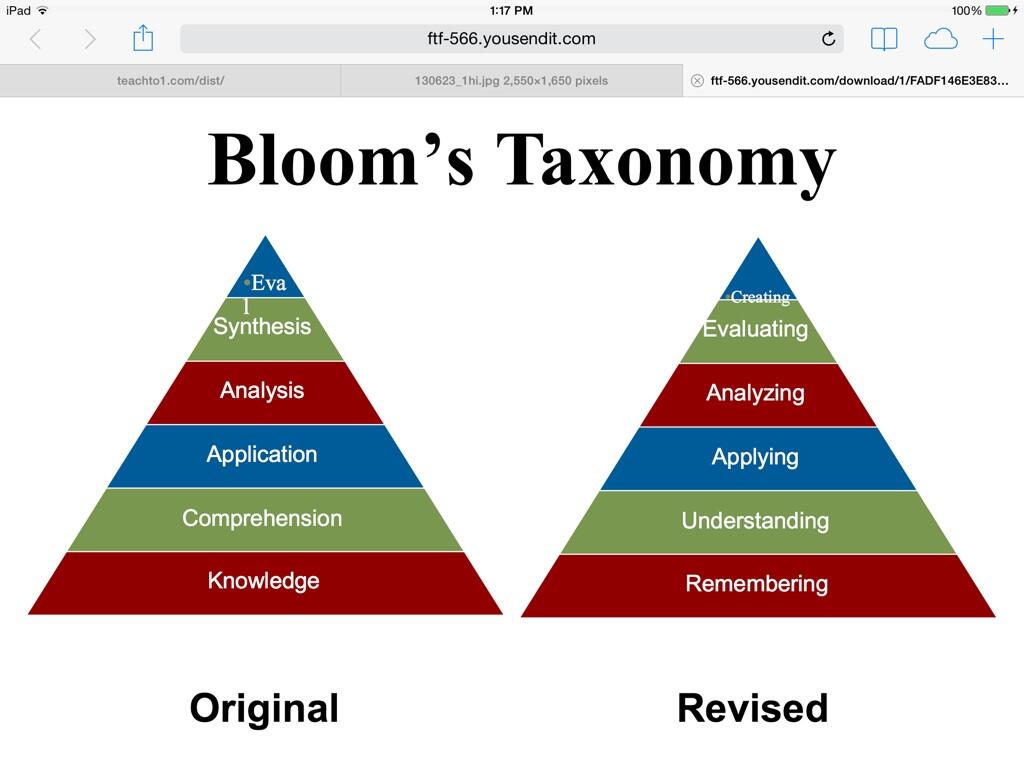
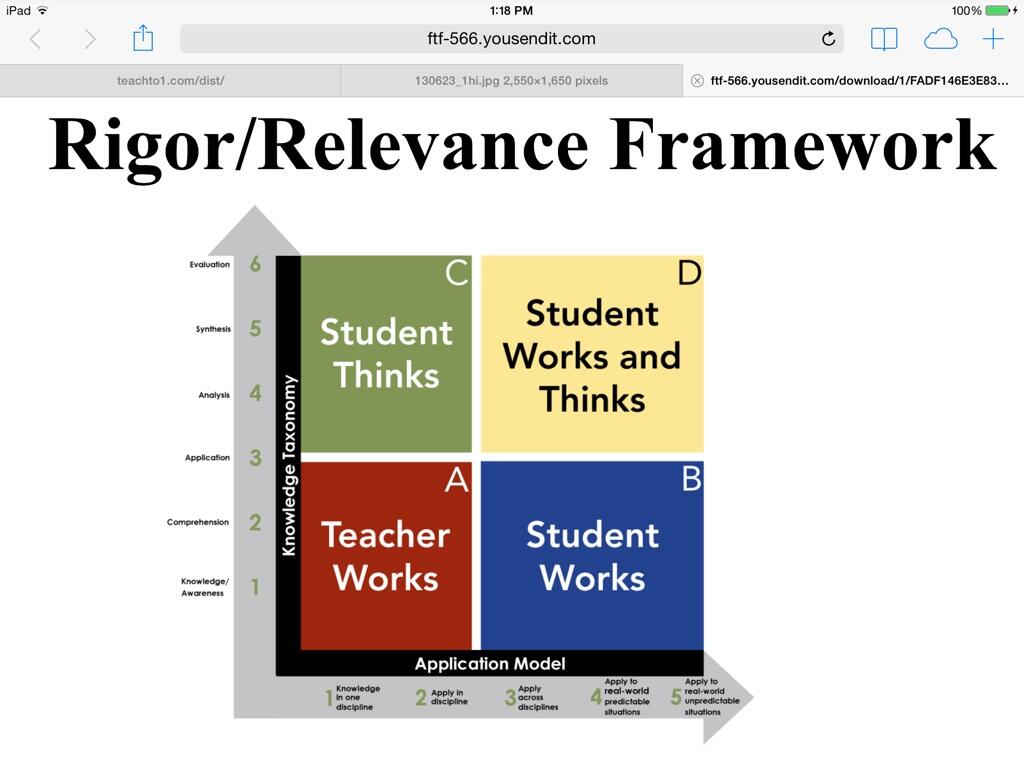
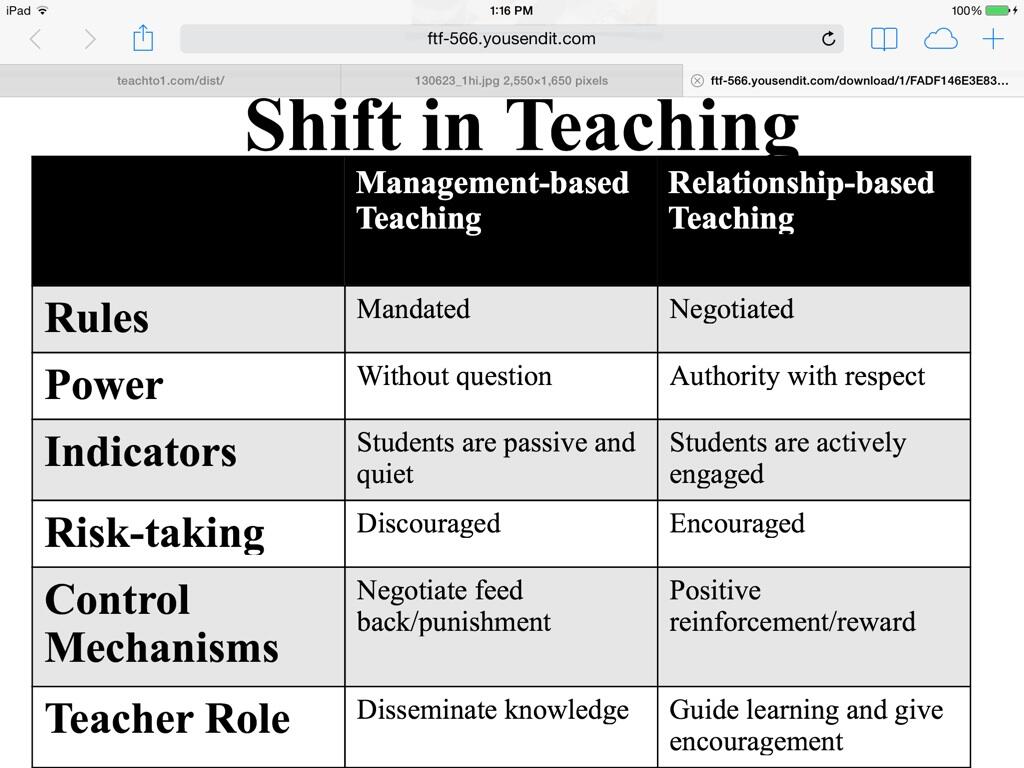
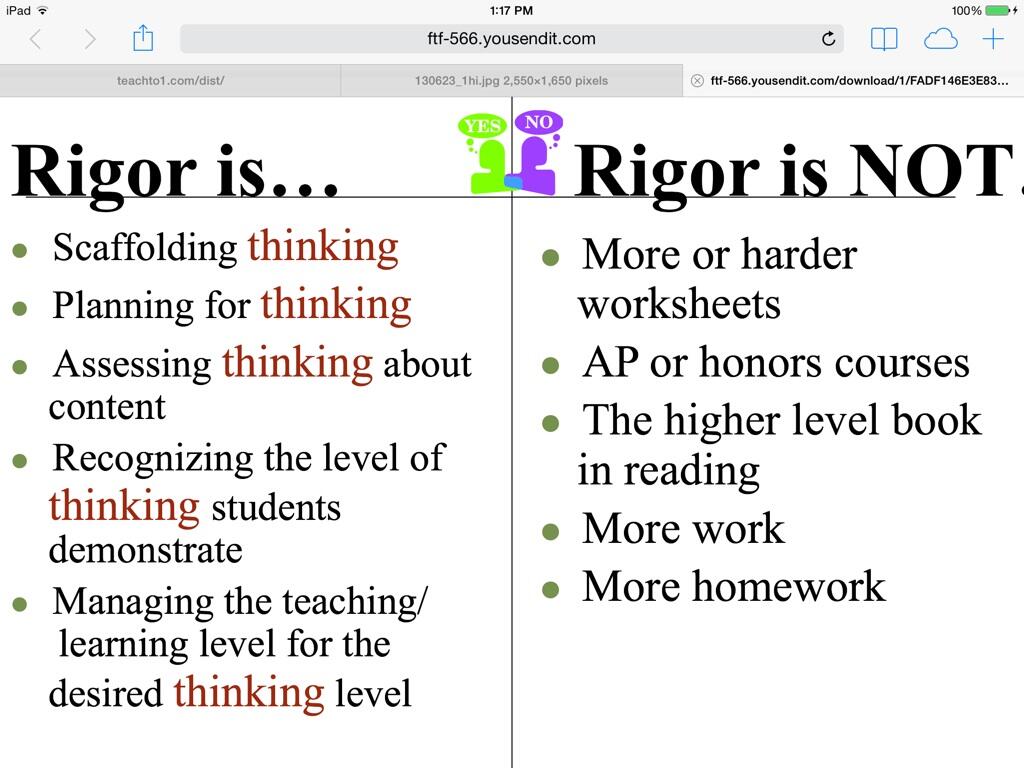
A-Adapting - Linda Jordan led a mentally stimulating session on the importance of creating a Culture of Learning focused on Relationships, Rigor and Relevance! Her slides say it all!


L-Listening - Our dedicated and faithful group of Christian Educators (#ChristianEducators) gather every Thursday at 9pm ET to share, encourage and challenge each other. This week we focused on listening skills and the importance of listening to understand, not just to respond. We discussed 10 principles of listening, 6 biblical listening skills and barriers to effective listening.


I-Inspiration - Our keynote speaker at #CPSEEI was the incredibly inspirational Salome Thomas-EL (@Principal_EL)! His standing ovation spoke to that! He encouraged all in attendance to be the adult in a child's life that he or she will look back on and remember the kinds words, motivation and reason to keeping going.


B-Brain Rules  - After finishing John Medina's book on Brain Rules, I realized how interwoven sleep, exercise, music and stress are to the way our brain works. He discusses 12 Brain Rules that explain how we learn, characteristics that improve and diminish our ability to learn and how being aware of these rules enables us to take charge of our learning and the learning of those around us!

E-Excuses - Sunday's sermon was entitled "Christian Weight Loss - Drop the Excuses!". John Harrison is an eloquent preacher and a Certified Financial Planner (CFP). He was our guest speaker on Sunday, June 29th. During his entire message, he carried around a dumbbell in his hand. We all wondered about its significance. At the close of his message, as he put down the weight, he encouraged everyone to rid themselves of all excuses and allow God to work through us so we can reach more of our potential! What an inspirational and scripture-based message. Next time I hit the gym to lift, I'll be reminded to "drop the excuses" and live to serve others as I was called to do!

R-Reflection - Our "Dream Team" for our Culture of Learning (#COLchat) on Monday's at 9pm ET with Michele Corbat (@MicheleCorbat), Rodney Hetherton (@RodneyHetherton) and Adam Hartley (@AdamHartley2014) focused the conversation around the importance of "Reflection". I've learned from this group the importance of regular reflection. That reflection, combined with feedback from our Professional Learning Network (PLN), has enabled many of us to transform our Culture of Learning into engaging learning environments where teachers and students look forward to our time together!