Tuesday, July 22, 2014

Our Learning Process

As was discussed today, several components of the learning process must be in place for the desired learning to occur. If the resulting data indicates there are gaps in understanding, we can examine the steps in the process.
  • If the data is correct, we look at the assessment. 
  • If the assessment was aligned to the Common Core State Standards (CCSS), we try to determine whether the learners were engaged in their learning.
  • If the learners were engaged, we examine whether the teaching was effective for the students' understanding. 
Examining the components of the learning process could provide insight into where the process is breaking down. Knowing which part of the learning is causing the disconnect, can be helpful in identifying the way to correct it. 

Wednesday, July 16, 2014

Reflection on our 7/14 Learning at #EdCampBLC

Monday's Professional Development (PD) at the Boston Park Plaza Hotel was inspiring since many dedicated educators took the day to brainstorm how to encourage all administrators, teachers and parents to create an ideal learning experience for all our learners! EdCampBLC was focused on Building Learning Communities.

The following are the sessions in which I choose to participate:

Block Scheduling:
  • Provides time on learning where concepts can be delved into with depth to add meaning and connections
  • Creates an environment where Flipped Learning could be implemented enabling learners to watch videos and try their hands in some hands-on practice prior to coming to class where more in depth learning takes place and questions facilitate more learning
  • Offers a lengthy differentiated learning environment where learners can collaborate to add depth of knowledge
  • Fosters learning where more cooperative and collaborative learning can occur 
  • Transitions need to be incorporated into these longer learning blocks to ensure the learning stays energetic and learners are encouraged to safe move often within their environment 
Common Core and PARCC:
  • Learning must be the driver!
  • Meaningful learning experiences come from great teaching and facilitation!
  • Let's continue to ask ourselves "What causes memorable learning to take place?".
  • The focus should be on Big Ideas and Essential Questions (EQs) as opposed to check off learning outcomes as they are taught.
Learning with Technology to Reach All Learners:
  • Content must be in an accessible format for all learners. 
  • Text to speech as well as speech to text were cited as resources that enabled some learners to find higher level of success. 
  • Several resources discussed included: Read & Write Chrome Extension, Rewordify, Explain Everything, UDL (Universal Design Language) Tech Toolkit Wiki and Notability 

Learning through Gamification:
  • Regular concept checks enable students to improve and thrive!
  • Improvement is always recognized and encouraged!
  • We need to find ways to empower students to compete, even if only with themselves!
  • Learning games provide for immediate feedback and opportunity for improvement! 

Tuesday, July 1, 2014

Inspired for a Higher CALIBER of Learning

In the past five days, I've received life-changing inspiration, opportunities to serve and profound truths to empower me and those I influence to reach for a higher CALIBER of learning! Allow me to "spell it out" for you!

C-Collaboration - Our collaboration at the Cambridge Public Schools Educational Excellence Institute (#CPSEEI) was not only inspirational but calming, as I did not have the good fortune to attend #ISTE2014 in Atlanta! Our day of Professional Development (PD) was centered around learning from each other, inspiring each other and challenging each other to reach new heights of excellence for our students and ourselves! Thanks to Jeffrey M. Young (Superintendent of Schools in Cambridge MA), Jessica Huizenga (@DrJessHuizenga) for coordinating the day and so many engaging presenters for providing such a great day of collaborative learning! I'd like to especially thank Sheila Yates for her engaging and practical session on Mathematical Practices and Discourse. I was especially grateful to connect with Mary DeLai, our new Superintendent for Wilmington Public Schools! We followed each other on Twitter and started brainstorming for our district!

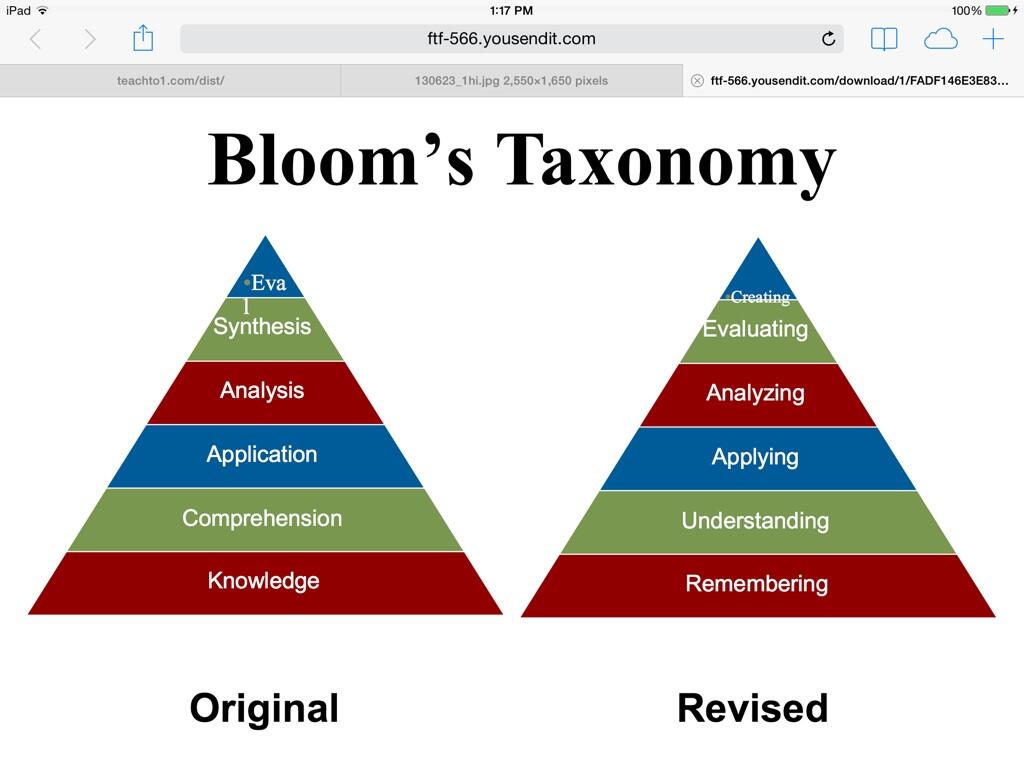
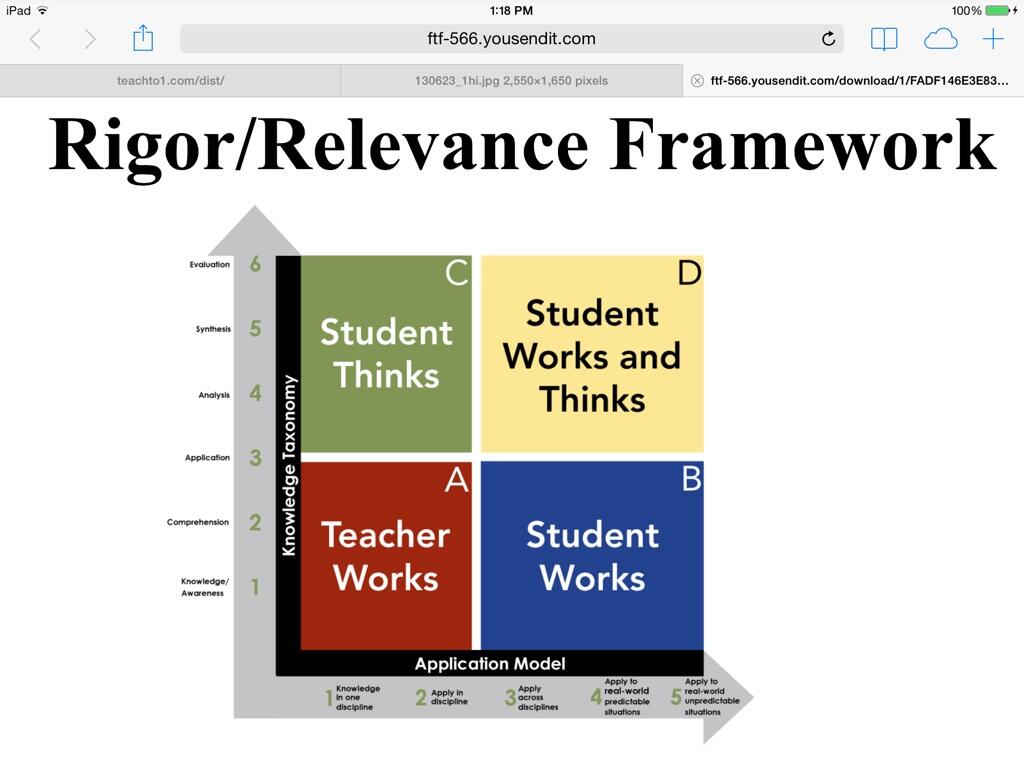
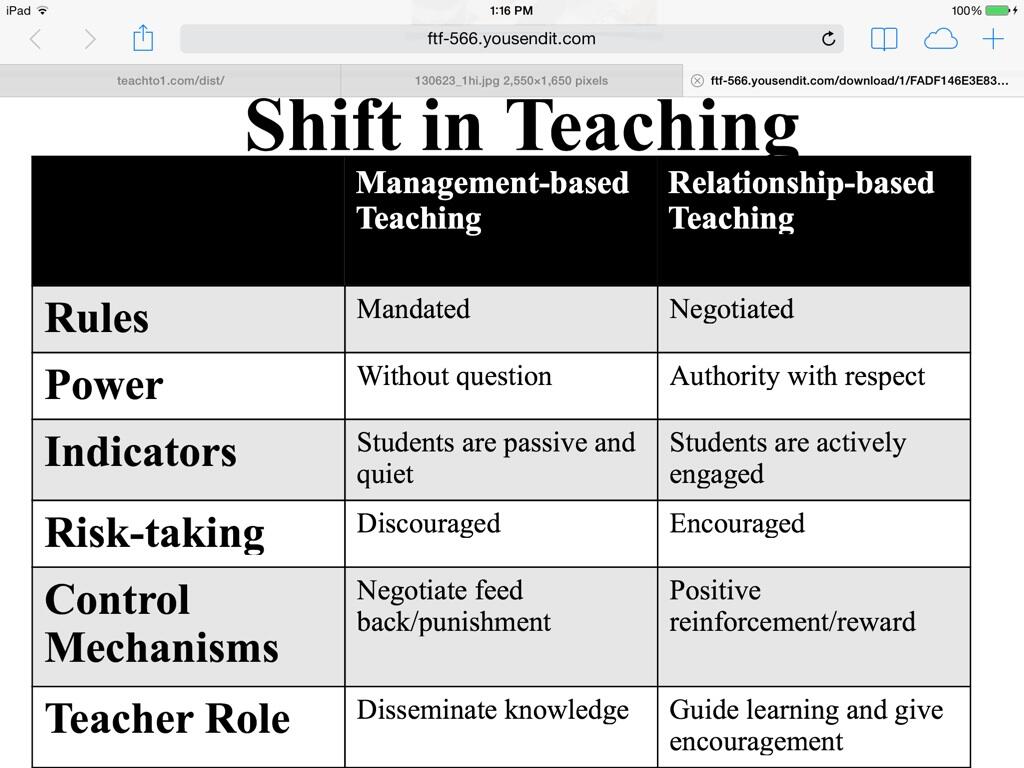
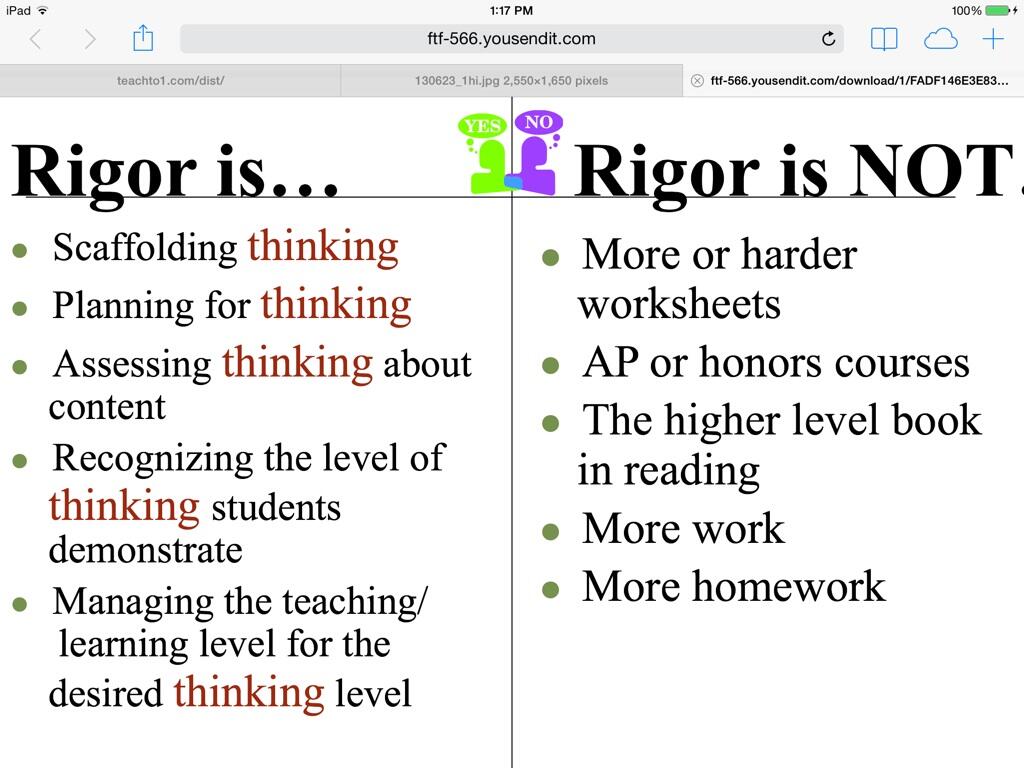
A-Adapting - Linda Jordan led a mentally stimulating session on the importance of creating a Culture of Learning focused on Relationships, Rigor and Relevance! Her slides say it all!


L-Listening - Our dedicated and faithful group of Christian Educators (#ChristianEducators) gather every Thursday at 9pm ET to share, encourage and challenge each other. This week we focused on listening skills and the importance of listening to understand, not just to respond. We discussed 10 principles of listening, 6 biblical listening skills and barriers to effective listening.


I-Inspiration - Our keynote speaker at #CPSEEI was the incredibly inspirational Salome Thomas-EL (@Principal_EL)! His standing ovation spoke to that! He encouraged all in attendance to be the adult in a child's life that he or she will look back on and remember the kinds words, motivation and reason to keeping going.


B-Brain Rules  - After finishing John Medina's book on Brain Rules, I realized how interwoven sleep, exercise, music and stress are to the way our brain works. He discusses 12 Brain Rules that explain how we learn, characteristics that improve and diminish our ability to learn and how being aware of these rules enables us to take charge of our learning and the learning of those around us!

E-Excuses - Sunday's sermon was entitled "Christian Weight Loss - Drop the Excuses!". John Harrison is an eloquent preacher and a Certified Financial Planner (CFP). He was our guest speaker on Sunday, June 29th. During his entire message, he carried around a dumbbell in his hand. We all wondered about its significance. At the close of his message, as he put down the weight, he encouraged everyone to rid themselves of all excuses and allow God to work through us so we can reach more of our potential! What an inspirational and scripture-based message. Next time I hit the gym to lift, I'll be reminded to "drop the excuses" and live to serve others as I was called to do!

R-Reflection - Our "Dream Team" for our Culture of Learning (#COLchat) on Monday's at 9pm ET with Michele Corbat (@MicheleCorbat), Rodney Hetherton (@RodneyHetherton) and Adam Hartley (@AdamHartley2014) focused the conversation around the importance of "Reflection". I've learned from this group the importance of regular reflection. That reflection, combined with feedback from our Professional Learning Network (PLN), has enabled many of us to transform our Culture of Learning into engaging learning environments where teachers and students look forward to our time together!

Wednesday, June 18, 2014

End of the School Year Reflection

Allow me to initially share that I continue to be extremely grateful to be an educator and to have the opportunity to positively influence the future for many. I live by the phrase, "To whom much is given, much is expected.". As my 14th school year draws to a close, I can say that my passion for our students and our learning is heightened with each passing year. I have grown professionally this year thanks to our Professional Learning Network (PLN) on Twitter. I have also become a more effective lead learner with the dedicated students I've had the pleasure of learning with this year!

With the help from #COLchat (with @MicheleCorbat @RodneyHetherton @AdamHartley2014 ), our students developed a Culture of Learning that empowered all students to be respected, valued and willing to participate in our collaborative learning. Some statements that I continued to hear this year were "I've never learned math like this before. I've previously struggled or been challenged by mathematical thinking. I can honestly say that math has become one of my favorite subjects and it's helped me in all of my other classes!".

Thanks to our students for remaining dedicated to each other and their studies right through our final exam week. Students committed themselves to studying and supporting one another with their collaborative questioning. Students continued to request "extra practice" in order to demonstrate their highest level of proficiency on our Final Exam or Summative Assessment. I even had some students that did not show their best on their final exam but were willing to stay the course, get even more "extra practice" and reassess! It paid off for each and every one of our students!

Thank you also to Danny Hill (@HillDw61) who inspired me and many others through his book BrickHouse!

Tuesday, June 10, 2014

Tuesday, May 27, 2014

Drowning in Our Standards and Curriculum!

Being pulled behind our family ski boat recently made me better understand how struggling students can feel overwhelmed. Skiing on top of the waves and frequently "catching some air" made me think about how most of our students feel when they're collaborating, learning and really understanding. However, several years ago, I was knee boarding behind our family boat when I lost the board from underneath me and found I was being pulled along by the ski rope caught or wrapped around my wrist. I was being dragged along with little to no control over the situation. Instead of "catching air", I was "catching water" or drinking gulps of the lake water. There was little to nothing I could do until the spotter in our boat finally realized I was in distress. Only at that point did the boat stop and my anguish begin to subside.

Now that I think back on the sensation I had being dragged along, I now know how some of our students feel when we drag them along with our standards and curriculum. Some students feel like they're drowning. Today, one of our students eluded to the fact that he's drowning and can't keep up with "all this math". At that moment, my mind went back to my incident of being helplessly dragged through and occasionally under the water. Now, I'm dragging him through our spiraled standards to achieve somewhere between proficiency and mastery. I need to stop this "Rowe" boat so he can catch his breath, stop feeling overwhelmed and have a chance to breathe and learn what our course is offering. I hope it is not too late to rekindle his interest.

Educators need to find the right balance between keeping the learning fresh and new, spiraling concepts to integrate and keep it all current while making sure we're not losing anyone in the wake of being overwhelmed and possibly drowning. Now I realize I should have been a better "spotter in the boat".

Friday, April 4, 2014

Learning by Feedback, Abstraction and Differentiation

The more I understand about learning, the more I believe Feedback, Abstraction and Differentiation are not a "FAD".

Feedback - In a couple of our classes, we have a collection of review questions due every ten days. The review questions are concepts from two to three weeks prior to the current date. The review questions are always changing while attempting to show the integration of various concepts. What I've noticed recently is that students are completing all the review questions and submitting them to me several days prior to the requested due date. Students pass in their work and ask for feedback in the form of "Mr. Rowe, would you be willing to circle the question numbers I don't yet have correct so I can try to find and fix my errors prior to passing it in?". These aggressive learners want to learn from their mistakes and have the opportunity to fix them in time. I'm so grateful for the attitude and grit of these dedicated students! They've taught me to provide learning opportunities where we can revise our thinking and understanding to reach higher levels of proficiency. Many of these students resubmit their corrected work accompanied by the statement, "Mr. Rowe, you'll be proud of me because I corrected all my mistakes. I promise!". I see the appreciation and confidence in their eyes when they hand in their revised learning.

Abstraction - I've recently begun to introduce material in a top-down or abstract way. As a class, we're discussing the structure, significance and abstraction of the new concept. We're collaborating at a 10,000-foot view prior to delving into the specifics of the material. We're examining the behavior of the mathematical concept generically before taking it apart specifically. Recently, our students have shared with me that their "brain hurts" and that they keep having mind-blowing experiences. One specific student has been expressing his mind-blowing learning by placing his hands on either side of his head and then quickly extending his hands out to simulate a cranial explosion! These students are extremely bright in my humble opinion and appreciating the challenge. There is no compliance here. It's pure focus, pondering and questioning. I'm often tempted to prompt them slightly, but I reflect and wait. It most instances, the wait was exactly what was needed to give our students the time to wrap their heads around the meaning. One student recently muttered to me as he left class, "Rowe, you're killing me with this approach. Thank you!". Yes, I was speechless!

Differentiation - Students try to find time to learn with me during the first eight minutes of our class when we're working on our Warm-Up, during my duty period, during their learning center period or after school. They're looking for one-on-one time with me since they have specific questions. They've taken a question as far as they can and are stuck. For some reason, their questions are getting more pointed, specific and intriguing. These students have started asking really thought-provoking questions. I'm not sure I can put my finger on why now, but we spend a considerable time during our class where we're asking questions, one after another about the whys of the process. The more time I spend individually with these students, the deeper their understanding, engagement and commitment. Many of them attack me with their questions the moment they get to our class. They've become relentless in their quest for understanding.

I continue to be so grateful for the Culture of Learning that we've fostered that enables us to crave feedback, be patient learning abstractly and insist on face-to-face learning until the "aha moment" ignites! Learning can and should be this stimulating!